New preprint: Sleep strengthens successor representations of learned sequences. Read it here.
Our lab presented at the Cognitive Neuroscience Society conference in Boston.
New preprint on sleep's role in episodic memory transformation. Read it here.
research
My current work uses computational modelling of behavioural and brain-imaging data to uncover how memories are transformed, and how sleep shapes these transformations.
from experiences to transformed memories
01
experiences
events, scenes, faces, words, and associations
02
representations
neural, behavioural, and computational format
03
sleep
sleep stages, slow waves, spindles, and offline physiology.
04
transformed memories
reorganisation, abstraction, and consolidation
the representational format of memories
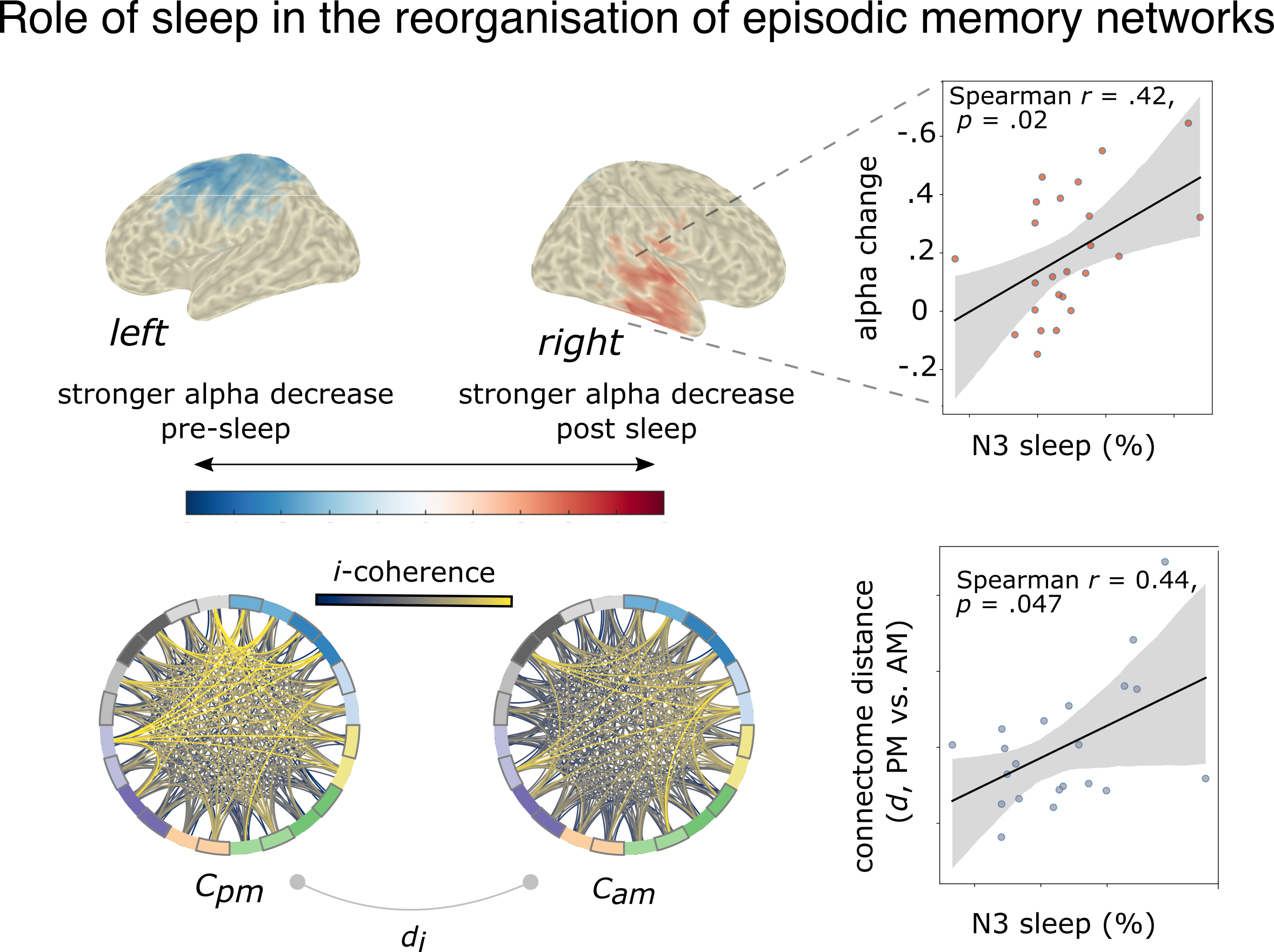
How does sleep change the content and representational format of episodic memories? We combine verbal recall, LLM-based text analysis, and at-home sleep EEG to investigate how remembered experiences are represented and transformed.
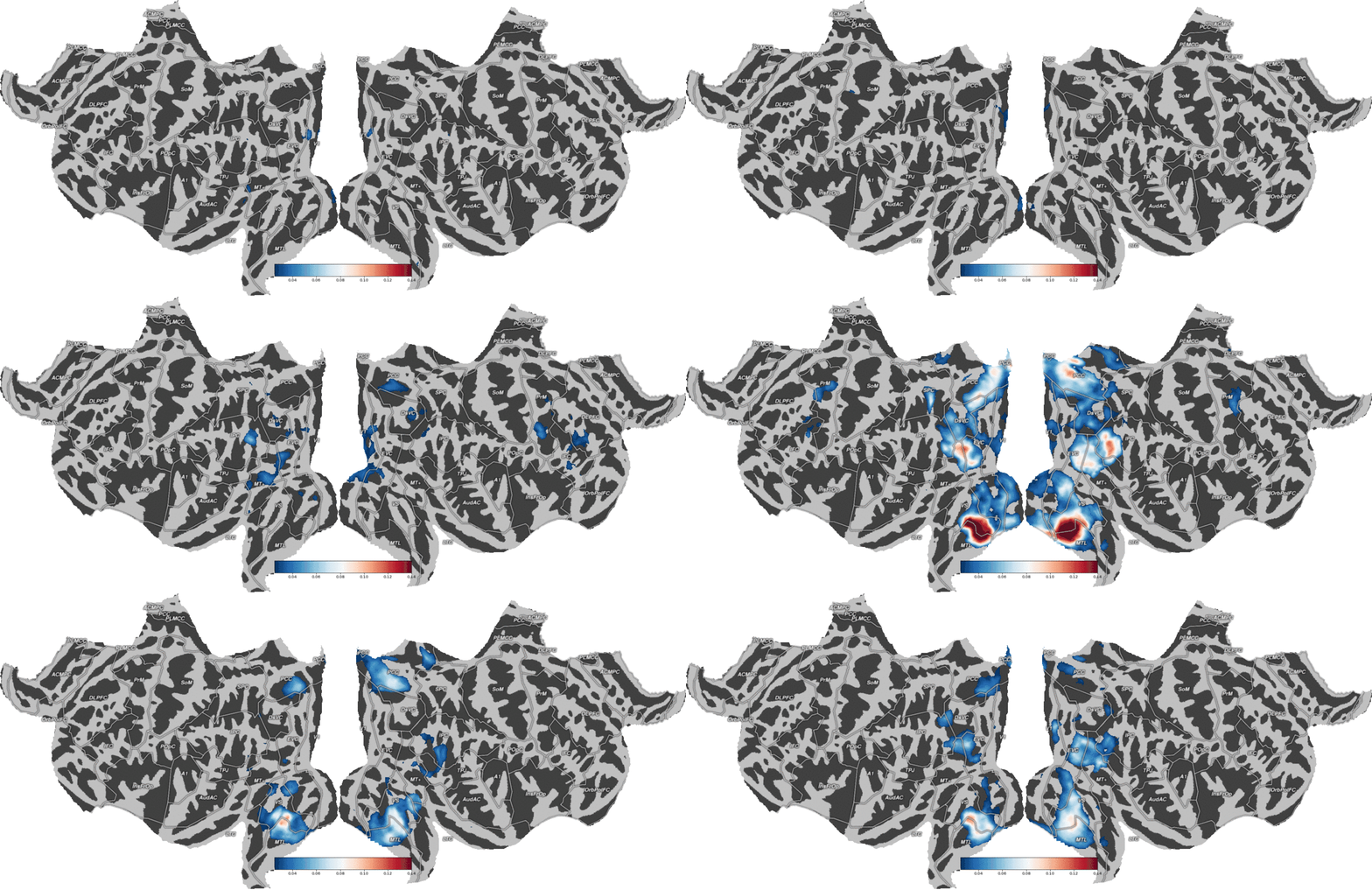
How does deep sleep reshape our memories? Our new study shows that slow-wave sleep (SWS) reorganises episodic memory networks, shifting recall from the parietal cortex to the anterior temporal lobe (ATL).
individual differences in visual-semantic brain representations
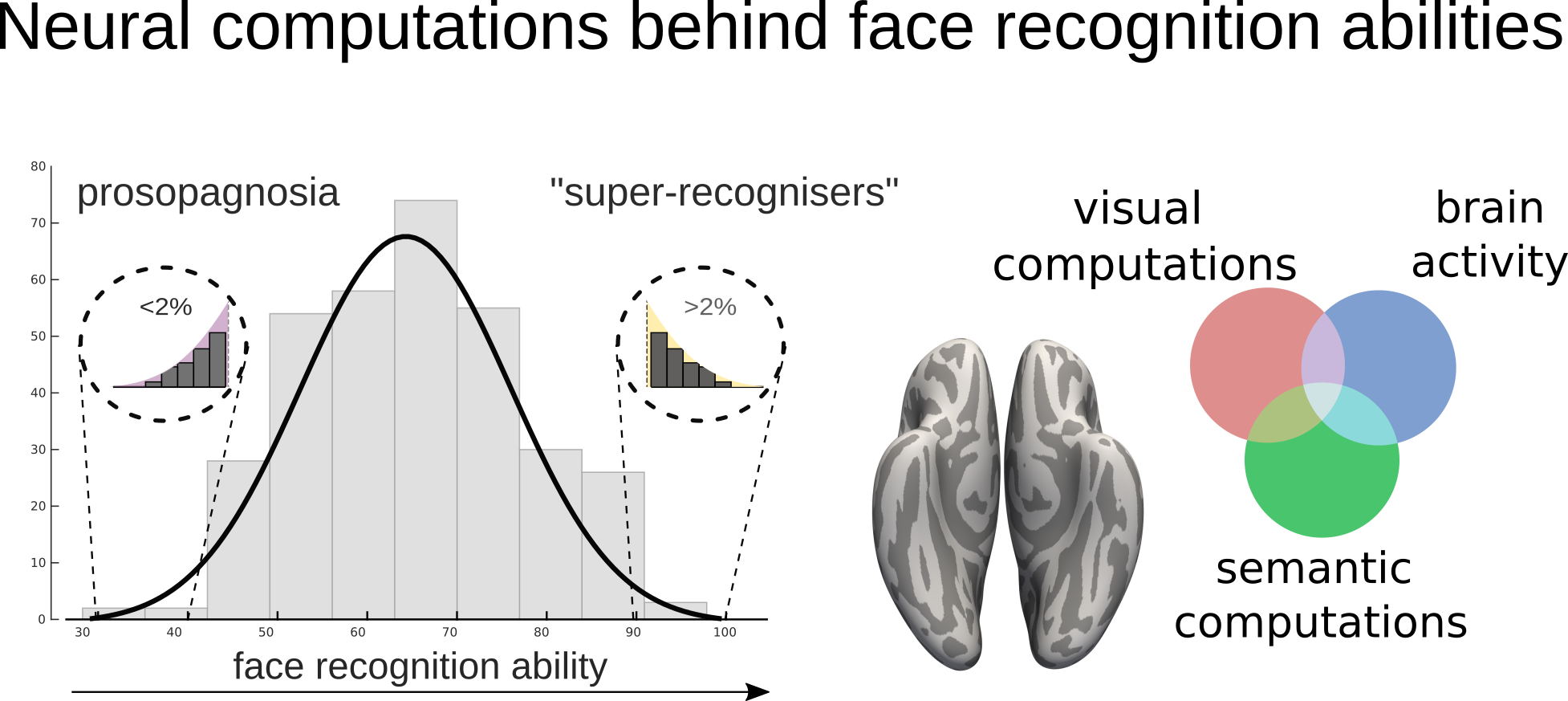
We explore how inter-individual differences in visual (face) cognition relate to visual and semantic representations in the brain, combining EEG decoding, behavioural metrics and representations in vision and language computational models.
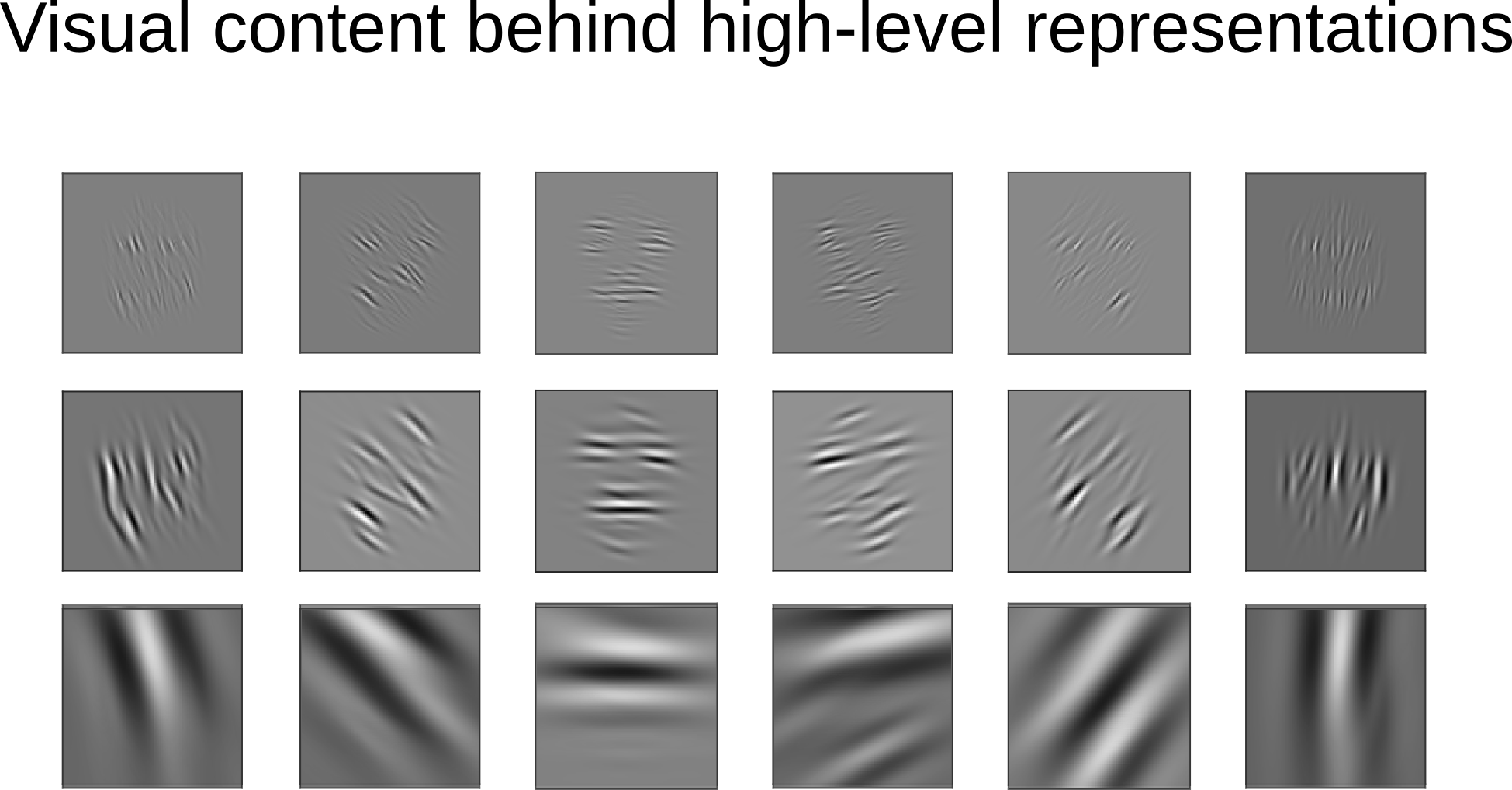
visual content behind face representations
This line of work maps the content of visual representations across different face recognition tasks using "reverse correlation" psychophysical techniques.
spatiotemporal fusion of EEG and fMRI
By combining EEG and fMRI, we uncover the spatiotemporal code the brain uses to represent visual objects. This fusion approach captures the millisecond-level dynamics underlying high-level visual processing.
How are episodic memory representations transformed as newly learned events are consolidated during sleep?
Methods
EEG-fMRI, and computational analyses of neural and memory content.
Status
Ongoing.
publications
He X, Büchel PK, Faghel-Soubeyrand S, Klingspohr J, Kehl MS, Staresina BP (2026). Sleep strengthens successor representations of learned sequences in humans. PLOS Biology, 24(4), e3003740. https://doi.org/10.1371/journal.pbio.3003740
Faghel-Soubeyrand S, Perzich P, Staresina BP (2025). Slow wave sleep is associated with a reorganisation of episodic memory networks. Neuropsychologia. Special Issue: sleep, memory and emotion
Faghel-Soubeyrand S, Ramon M, Bamps E, Zoia M, Woodhams J, Richoz A-R, Caldara R, Gosselin F, Charest I (2024). Decoding face recognition abilities in the human brain. PNAS Nexus.
Brotherwood P, Faghel-Soubeyrand S, Van Den Bosch J, Charest I (2023). Characterising the spatiotemporal profiles of neural object representations using implicit and explicit similarity judgement tasks. Cognitive Computational Neuroscience.
Hadid V, MacLean M, Grand-Maitre C, Dandrimont J, Higgins M, Faghel-Soubeyrand S, Lepore F (2023). Early processing of unattended emotional faces increases the brain response to attended emotional expressions: an SSVEP study. 18th International Symposium on Medical Information Processing and Analysis.
Faghel-Soubeyrand S, Kloess JA, Gosselin F, Charest I, Woodhams J (2021). Diagnostic features for human categorisation of adult and child faces. Frontiers in Psychology.
Faghel-Soubeyrand S, Lecomte T, Bravo MA, Lepage M, Potvin S, Abdel-Baki A, Villeneuve M, Gosselin F (2020). Abnormal visual representations associated with confusion of perceived facial expression in schizophrenia with social anxiety disorder. Schizophrenia.
Faghel-Soubeyrand S, Alink A, Bamps E, Gosselin F, Charest I (2019). Visual representations supporting category-specific information about visual objects in the brain. Cognitive Computational Neuroscience, Berlin. Conference paper.
Faghel-Soubeyrand S, Dupuis-Roy N, Gosselin F (2019). Inducing the use of right-eye enhances face-sex categorization performance. Journal of Experimental Psychology: General.
Dupuis-Roy N, Faghel-Soubeyrand S, Gosselin F (2018). Time course of the use of chromatic and achromatic facial information for sex categorization. Vision Research.
Gosselin F*, Faghel-Soubeyrand S* (2017). Stationary objects flashed periodically appear to move during smooth pursuit eye movement. Perception, 46(7), 874-881.
teaching
My teaching spans undergraduate and graduate levels in cognitive psychology, cognitive neuroscience, and quantitative methods. I have taught theoretical and practical material on memory, sleep, brain imaging, experimental design, data analysis, and programming (Python, Matlab), with an emphasis on helping students think critically about empirical research.
University of Oxford
Lecturer and TutorIntroduction to Cognitive Psychology, LMH Summer School2026
DemonstratorDecoding the Mind, advanced labs2023, 2024, 2025
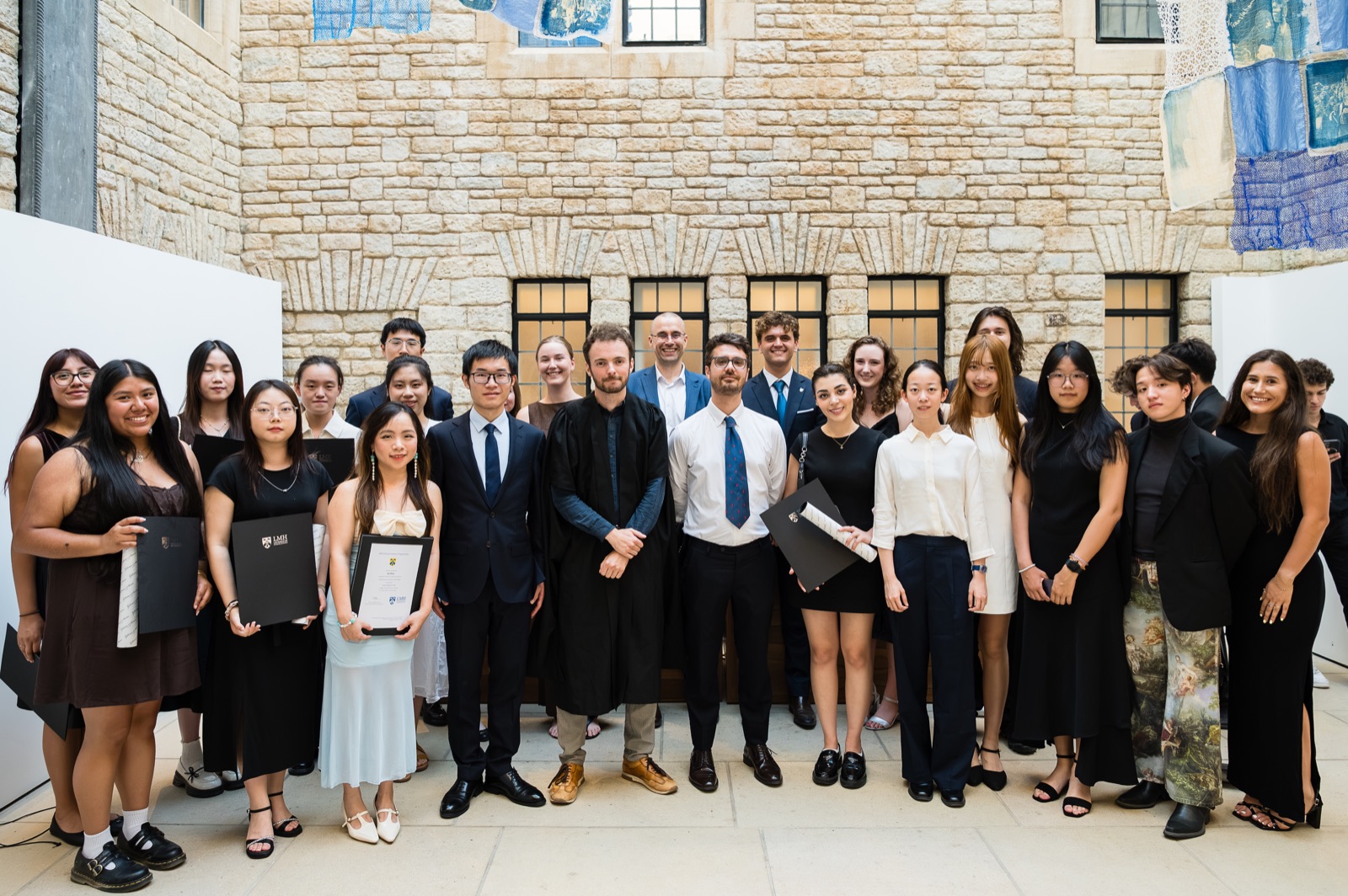
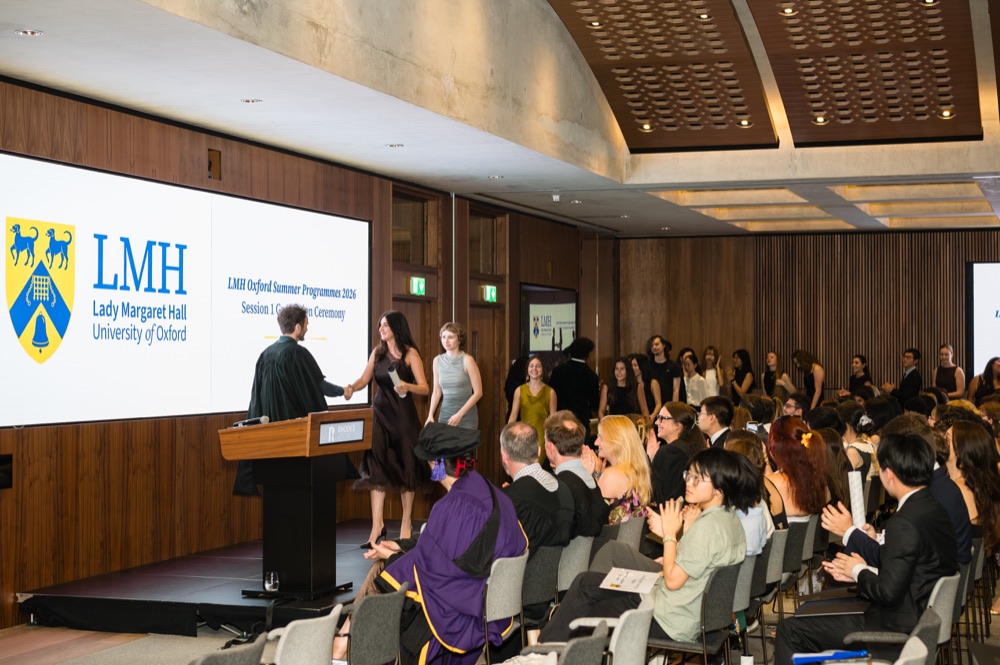
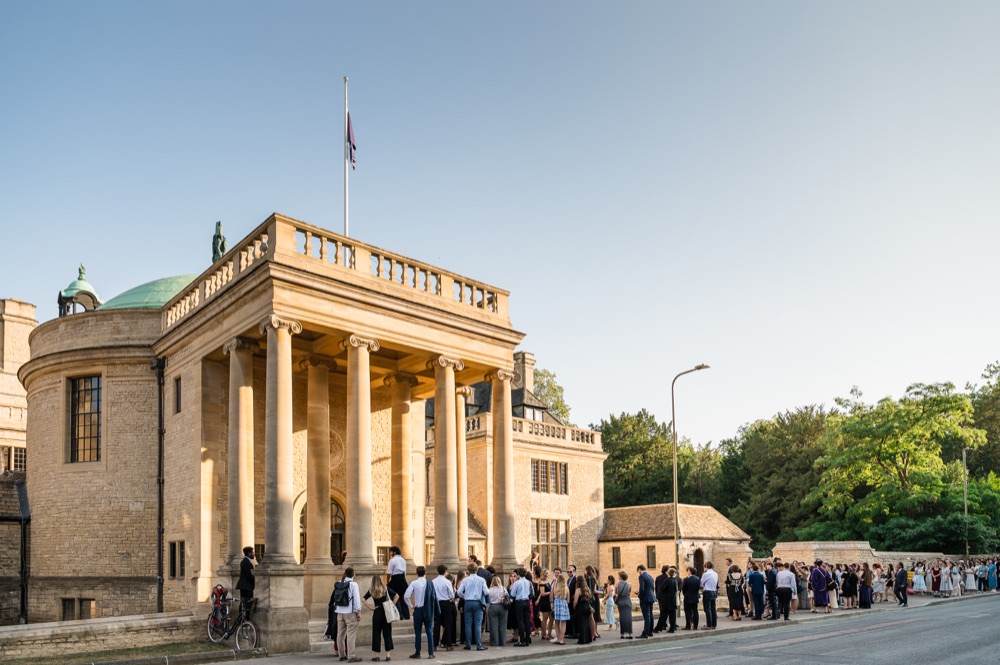
LMH Summer Programmes 2026 · Graduation at Rhodes House, Oxford. Lecturer and Tutor, Introduction to Cognitive Psychology.
Université de Montréal
LecturerProgramming in Cognitive Neuroscience (PSY2038/6976)2020-2021
LecturerVisual Cognition Laboratory (PSY2007)2019
Teaching AssistantNeuroanatomy and Neurophysiology (PSY1048); Neuroscience of Cognition and Behaviour (PSY1049); Visual Cognition Laboratory (PSY2007)2015-2018
about me
human memory | vision | sleep | EEG | Intracranial EEG | fMRI | deep learning
My research examines how the content of perception and experience shapes human behaviour, with a focus on visual recognition, episodic memory, and sleep-dependent memory transformation.
I combine behavioural experiments, EEG, fMRI, EEG-fMRI fusion, intracranial recordings, and machine learning to characterise how visual, semantic, and mnemonic representations are supported by the brain.
During my postdoctoral research at the University of Oxford, in the Staresina Lab, I study the neural code of episodic memories as they are transformed during sleep.
I was funded by a Newton International Fellowship from The Royal Society (2023-2025). I am currently a Banting Postdoctoral Fellow in the Department of Experimental Psychology at the University of Oxford, and a Junior Research Fellow at Wolfson College.
honours and awards
2025
Banting Postdoctoral Fellowship, Natural Sciences and Engineering Research Council of Canada (NSERC) — 140,000 $
2024
Junior Research Fellowship, Wolfson College, University of Oxford — ~£10,000
2023
Newton International Fellowship, The Royal Society — £149,121
Academic Excellence Certificate for Ph.D thesis, Canadian Psychological Association
2022
Best oral presentation in Health and Artificial Intelligence, CHUM — 1,000 $
J.A. DeSeve Excellence Scholarship, University of Montreal — 8,000 $
Neuro-AI Excellence Scholarship, UNIQUE Centre — 15,000 $
2021
UNIQUE-IVADO Best Graduate Abstract Award, MAIN — 400 $
Desjardins Foundation Scholarship — 5,000 $
IVADO PhD Excellence Scholarship — 75,000 $
V-VSS 2021 Elsevier/Vision Research Travel Award, Vision Science Society
2020
University of Montreal's Google Doctoral Scholarship — 20,000 $
AI Studies Scholarship, University of Montreal — 10,000 $
Research Training Scholarship, Mitacs & Études Supérieures — 6,000 $
2019
MEES Mobility Scholarship — 3,000 $
FESP Prize for Best Oral Presentation, University of Montreal — 350 $